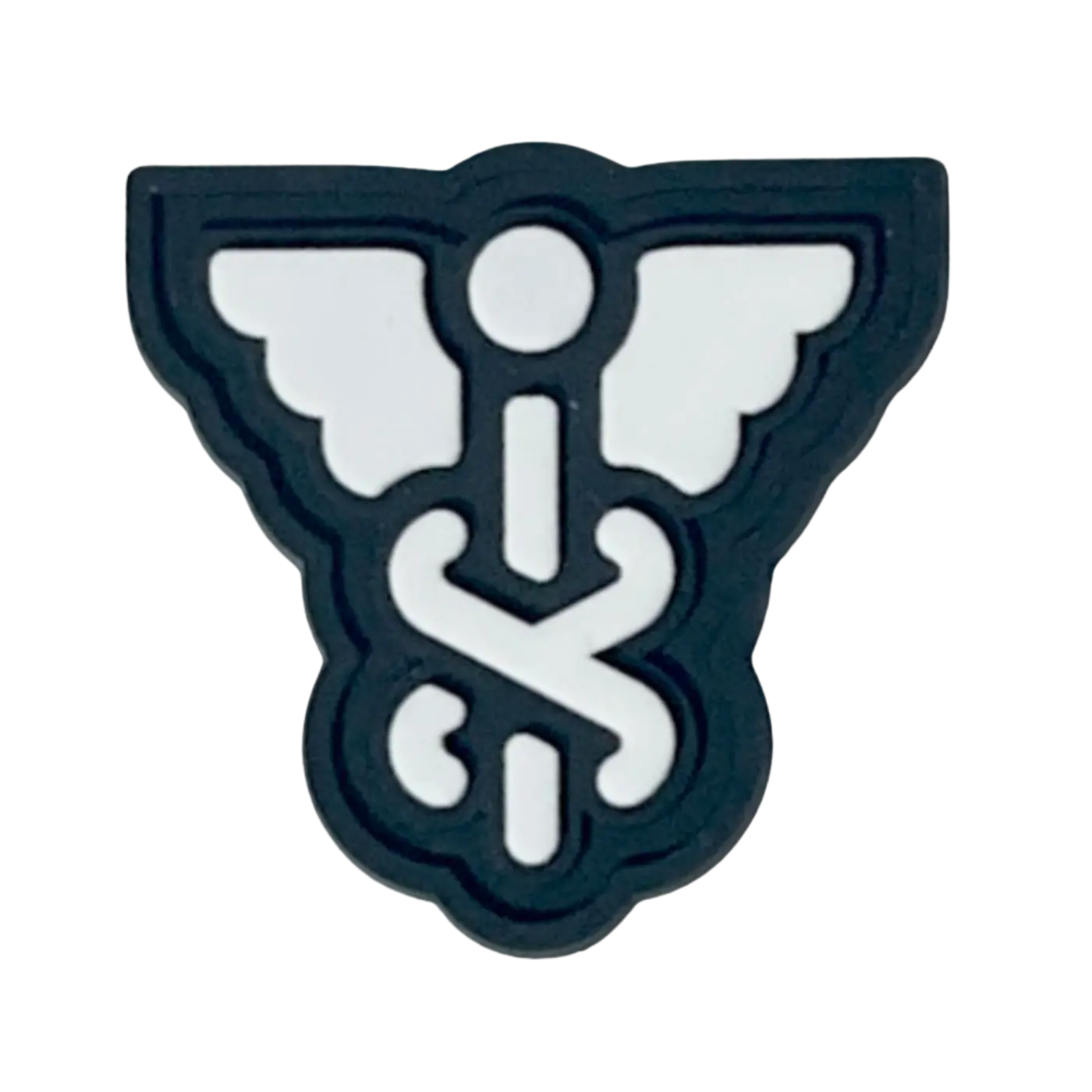
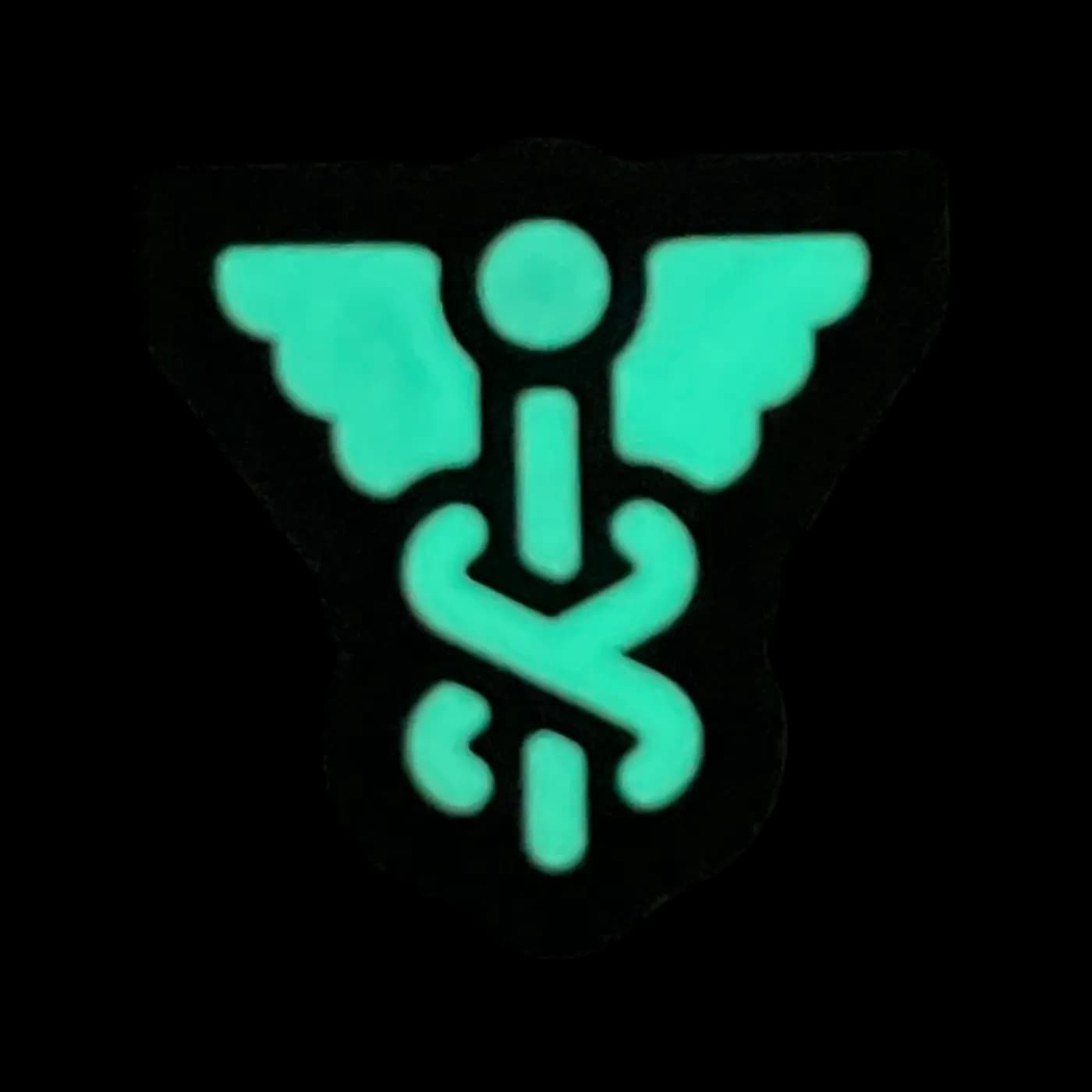
Some days call for less world. Overhead light doing its worst from directly above, a room that keeps asking to be scanned face first, the specific tax of being visible for longer than a hallway takes to cross. I cut Dispensing Nº 0 for exactly those days: a chino cotton cap, one hand-applied phosphor patch, nothing else.
01 — WHY GLARE COMES FROM ABOVE
Daylight arrives at an angle and loses most of its force by the time it reaches a face. Overhead lighting does not have that courtesy. A downlight or a strip of fluorescent tube sits close to directly above the eye, and the shortest path from a light source to an eye is also the harshest one.
The leaflet is plain about why the cap exists: "Prescribed for glare and days you would rather not be examined." A brim intercepts light before it reaches the eye. The same geometry does the same job in a visor, an awning, or a hand held flat above the brow. None of it is clever. It is exactly as clever as it needs to be.
02 — WHAT A BRIM ALSO DOES
A brim that blocks a downlight also lowers how much face a room gets at eye level. Move the edge of a cap down a few centimetres and less of the face sits in the sightline that starts a conversation nobody asked to start. This is a fact about geometry, not a claim about anyone's tolerance for being looked at.
The same subtractive logic runs through why a woven label fails at the neck: the fix removes the input rather than asking a nervous system to file it as background. A brim does the equivalent job for the eyes instead of the skin.
03 — THE SPECIMEN
Composition: chino cotton. One phosphor patch, hand-applied. It glows in the dark. That has nothing to do with glare: it is the mark I put on everything I make.
Three specimens. One size. Bone. €105, tracked delivery included, shipping within the EU only on this occasion. Nº 0 is a trial batch. It does not begin the numbering. The first hand-knit garment carries that number, when it exists.
The name for all of this sits one page over: pia mater, the membrane closest to the nervous system, applied here to what sits closest to the eyes.
04 — HOW ADMISSION WORKS
There is no cart under this cap. The word for what happens next is prescription, not purchase, and it runs in three steps.
1. Admission. Give an email address to the register. One field, one button. No payment happens at this step.
2. The draw. In October, three patients already on the register are chosen by chance and written to. Being chosen is not a bill: it is notice that a specimen has been set aside.
3. The prescription. Taking it up costs €105, tracked delivery included, asked only of the three patients who are written to. A prescription may be declined. Nothing is owed. If it is declined, or not taken up within seven days, it passes without comment to another patient on the register, chosen the same way.
Three specimens exist. The count does not change once the draw runs.
THERE IS NO OTHER DOOR.
REQUEST ADMISSION